
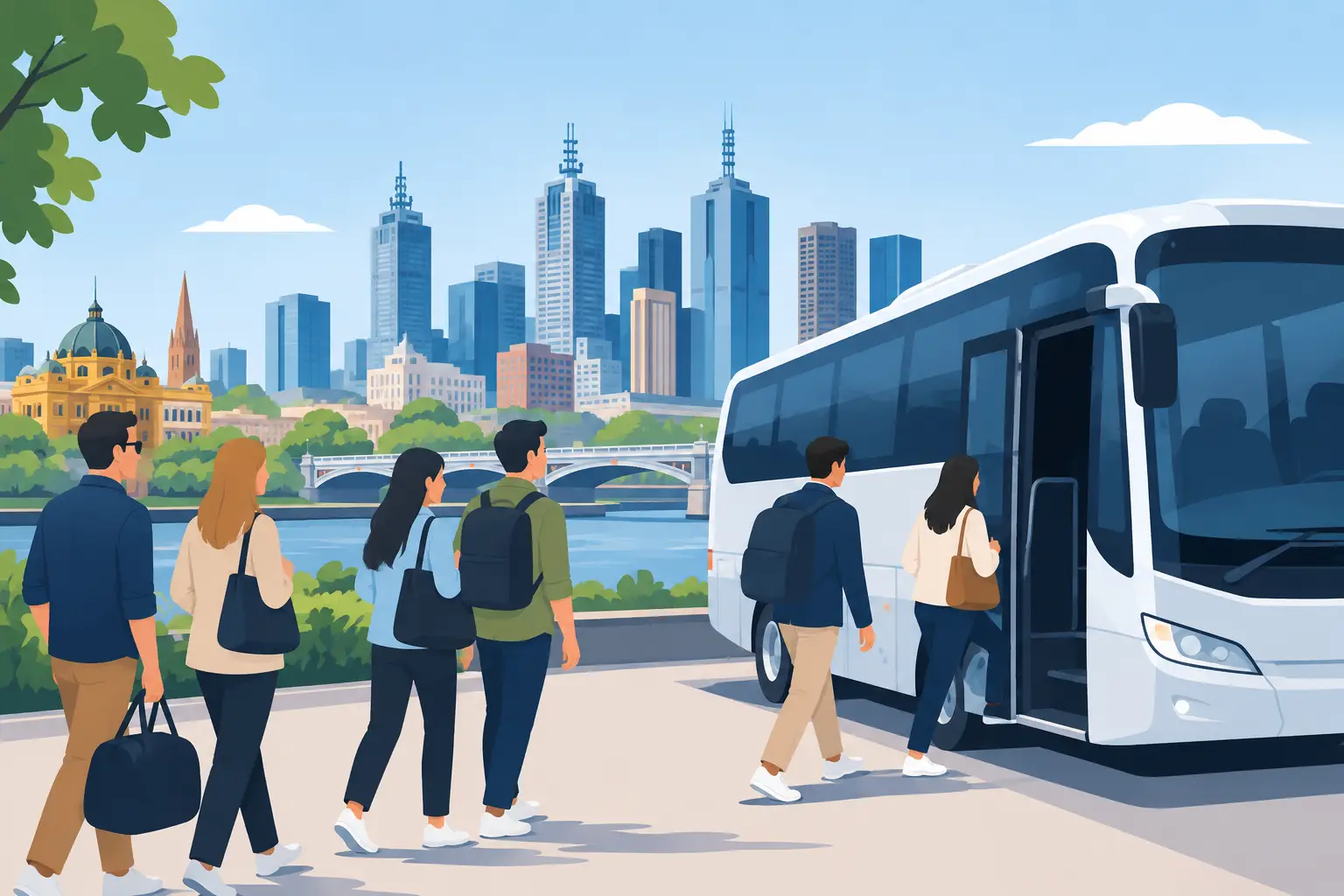
A great event can unravel in a parking lot. Guests arrive late because they took different routes, someone cannot find the venue entrance, and the organizer spends the first hour answering calls instead of welcoming people. Professional event transport puts one driver, one vehicle, and one agreed plan behind the journey so the group can arrive together and start the occasion properly.
For events across Melbourne, the Mornington Peninsula, the Yarra Valley, and Country Victoria, a charter bus is often the practical alternative to coordinating a convoy of cars. It removes the pressure of parking, regional navigation, designated drivers, and last-minute changes to pickup arrangements. Just as importantly, it gives the organizer a clear transport plan that fits the group rather than forcing the group to fit public transit or rideshares.
Start Event Transport With the Group Size
The first booking decision is not the destination. It is the number of passengers who need a seat. An accurate headcount determines the right vehicle, the pickup approach, and whether everyone can travel in one group.
A 12- or 14-seat bus may suit a small team dinner, family celebration, or intimate winery outing. Groups attending weddings, conferences, sporting fixtures, or birthday events may be better served by 21-, 25-, or 34-seat transport. For larger corporate functions, school-related events, major celebrations, and guest transfers, 45-, 48-, 50-, and 57-seat buses allow more people to travel together.
It is worth allowing for the guests who are likely to be added after the first invitation goes out. Booking a bus that is too tight on capacity can create an avoidable problem when a partner, colleague, or family member confirms late. On the other hand, hiring much more capacity than needed may not be the best use of the event budget. A tailored quote based on a realistic passenger number helps strike the right balance.
Build the Schedule Around the Moments That Matter
Event transportation works best when the schedule is built backward from the time guests need to be at the venue. The important arrival time is not always the event start time. A wedding guest transfer may need to arrive well before the ceremony. A corporate group might need time for registration and coffee before a conference begins. A winery tour needs enough room between bookings to enjoy each stop rather than rushing back to the bus.
Share the full outline when requesting a quote: pickup location or locations, required arrival time, venue address, planned stops, and final drop-off point. If there is a firm finish time, include that too. A driver can work from a clear itinerary, but a vague plan can make a straightforward trip harder to manage.
For a single transfer, the schedule may be simple: collect guests from Melbourne, travel to the venue, then return at an agreed time. For a full-day event or regional charter, allow for meal stops, venue check-in times, waiting periods, and the pace of the group. The right plan depends on the event. A corporate transfer generally benefits from a tight timetable, while a family celebration or winery day may need more flexibility.
Pickup Points Need Clear Instructions
One central pickup point is usually the easiest option, particularly for larger groups. It reduces waiting time and makes the departure process more predictable. A second pickup can be useful when guests are coming from opposite sides of Melbourne, but each additional stop affects the timeline.
Choose pickup locations where the bus can safely stop and passengers can wait without blocking traffic. Large venues, hotel entrances, clearly identified street locations, and suitable parking areas are often preferable to narrow residential streets. Tell guests exactly where to meet, what time to arrive, and who to contact if they are delayed.
A useful rule is to ask passengers to be ready before the listed departure time. The bus cannot wait indefinitely for every late arrival, especially when the group has a venue booking or regional appointment to meet. Clear communication is kinder to the whole group than an optimistic schedule that leaves no room for real-world delays.
Match the Vehicle to the Type of Event
Not every event trip has the same requirements. The destination, duration, passenger mix, and equipment all influence the best transport choice.
Wedding transport often involves separate movements. One bus may carry guests from accommodation to the ceremony, then continue to the reception or return guests safely at the end of the night. The key detail is knowing which guests are traveling on each leg. A full bus outbound does not always mean the same number will travel back.
Corporate event transport is usually centered on reliability and timing. Airport-area transfers, team functions, off-site meetings, and conference travel benefit from a single point of contact and a vehicle sized for the confirmed attendance list. If the event runs on a fixed agenda, build extra time into the travel schedule rather than expecting city traffic to cooperate.
For Yarra Valley and Mornington Peninsula events, the journey is part of the day. A driver-led charter allows guests to enjoy tastings, lunches, celebrations, and views without assigning someone to drive home. It also gives the group a practical way to move between wineries, restaurants, accommodation, and event venues that may be spread across the region.
Family events can be less formal, but they still benefit from structure. A reunion, milestone birthday, race day, or holiday gathering may bring together people who do not know the area or who would rather not drive after a long day. Group transport keeps the logistics simple while allowing everyone to share the experience from the first pickup.
Plan for What Happens After the Main Event
The return trip deserves the same attention as the outbound journey. Guests may leave at different times, especially after a wedding reception, concert, or evening celebration. If the group is expected to travel back together, make that expectation clear well before the event begins.
For late-night returns, confirm the departure time, final drop-off location, and whether the bus will make more than one drop. A single return destination is generally the most efficient arrangement. Multiple drop-offs may be possible depending on the route and schedule, but they should be planned in advance rather than decided after the event ends.
It also helps to nominate one event contact. That person can communicate any venue access updates, coordinate guests at pickup, and speak with the driver if the group needs to adjust within the agreed itinerary. The driver is there to manage the transport, while the organizer remains the best person to make decisions on behalf of the group.
What to Include When You Request an Event Transport Quote
A detailed inquiry leads to a more useful quote and reduces back-and-forth before the booking is confirmed. Include the event date, expected passenger count, pickup suburb, destination, preferred pickup time, return requirements, and any additional stops. If the group is traveling to a regional venue, provide the venue name as well as the address where possible.
Mention anything that could affect access or timing. This may include a venue gate, a restricted loading zone, a large amount of luggage, a formal check-in time, or guests who need to be collected from accommodation. These details are not minor. They help make sure the vehicle and itinerary suit the day you are actually planning.
Bus and Driver Hire can provide driver-inclusive charter transport for groups of 12 through to 57 passengers across Melbourne and Victoria. The value is not simply having a bus available. It is having a vehicle sized for the group, a professional driver responsible for the route, and a plan that supports the occasion rather than adding another task to the organizer’s list.
The best time to arrange transport is when the venue and date are confirmed, not when invitations are already out. Request a quote with the essentials, keep your passenger count updated, and give guests one clear plan for where to be and when. That leaves more room for the reason everyone is gathering in the first place.