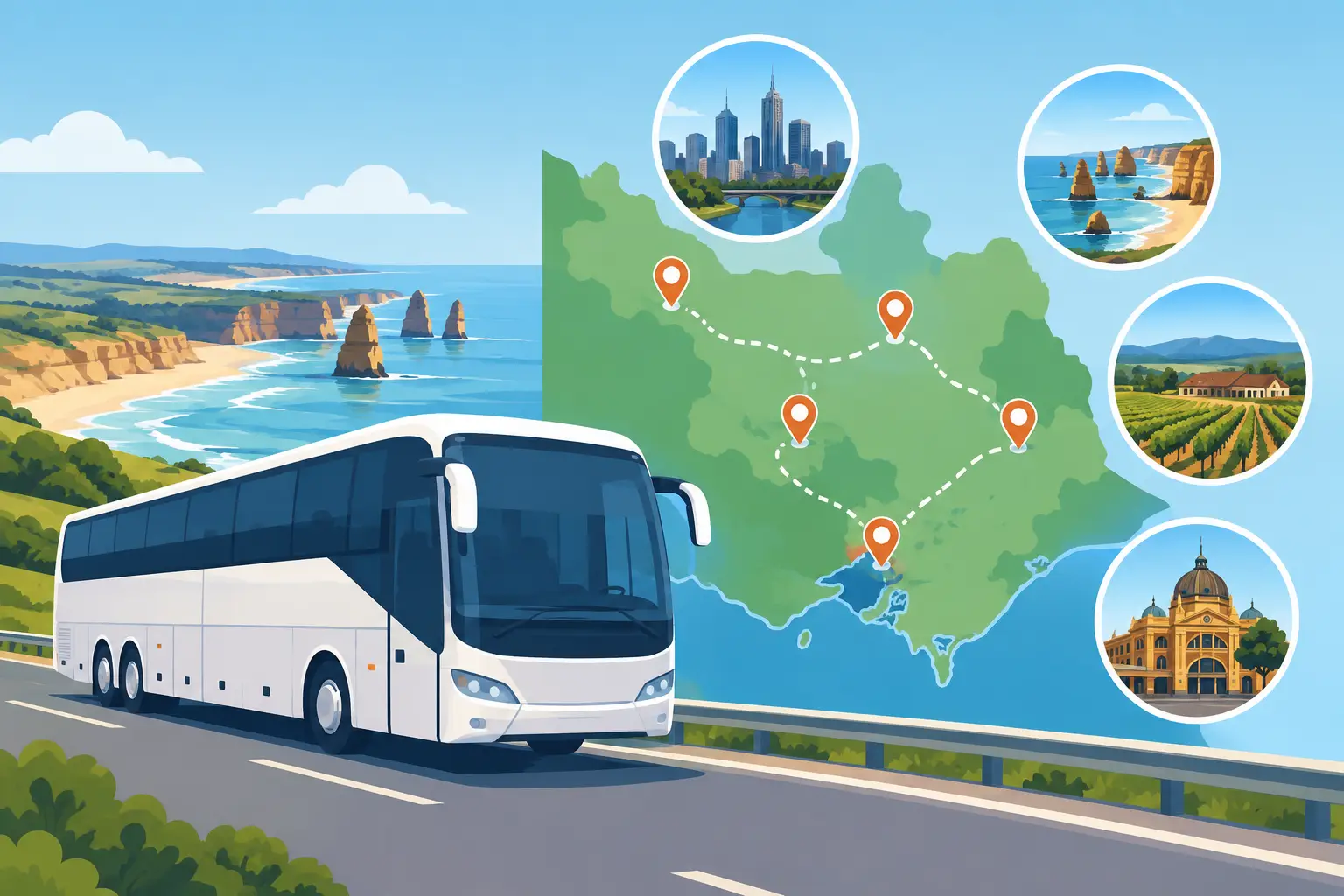

A group transport guide is most useful when the day has no room for scattered arrivals. A wedding ceremony starts at a set time. A corporate team needs to reach a conference together. A winery group wants to enjoy the Yarra Valley without counting cars, drivers, and parking spaces. Hiring one bus with a professional driver turns a moving group into one organized plan.
For trips across Melbourne, the Mornington Peninsula, the Yarra Valley, and Country Victoria, the right charter is not simply the largest vehicle available. It is the bus that suits your passenger count, pickup pattern, luggage, route, and schedule. Planning those details early makes quoting clearer and helps the day run on time.
Start With the Group, Not the Destination
The destination matters, but the headcount is where practical planning begins. Get a realistic number of passengers before requesting a quote, including organizers, children, photographers, coordinators, or guests traveling from the same pickup point. A bus that is too small creates last-minute complications. A much larger vehicle may be unnecessary if your final group is compact.
For smaller outings, a 12-, 14-, or 21-seat bus can be a practical fit for family celebrations, airport transfers, executive groups, or a close group of friends heading to a winery. Medium-sized groups often suit 25- or 34-seat vehicles, particularly for weddings, office events, and regional day trips. For larger guest lists, 45-, 48-, 50-, and 57-seat buses keep more people together in one vehicle.
Do not plan around an estimated maximum if several people are still undecided. Instead, provide the current confirmed number and explain whether it may change. A transport provider can recommend a suitable capacity and advise when your final count is needed.
Allow for luggage, equipment, and special needs
Seat numbers tell only part of the story. Airport groups may have suitcases. Corporate teams may carry presentation materials. Wedding parties can have garment bags, flowers, or signage. Let the operator know about anything that needs space so the vehicle selection reflects the complete trip.
It is also worth identifying accessibility, mobility, child-seat, or boarding requirements at the quote stage. These details are easier to accommodate when they are part of the original plan rather than a day-of surprise.
Build a Route That Works in Real Conditions
A direct transfer from Melbourne to a Mornington Peninsula venue is different from an all-day winery itinerary with several Yarra Valley stops. Give your transport provider the full outline: each pickup point, destination, planned stop, and final drop-off. That information allows for realistic travel timing rather than a quote based on only the first and last address.
Multiple pickups can be helpful, but they add time. For a corporate transfer, one central pickup point may be the most efficient way to keep the entire team on schedule. For a wedding, a hotel pickup followed by a guest pickup point can make attendance easier. It depends on the event and whether convenience or the tightest possible timetable is the priority.
Regional travel requires the same level of detail. A Yarra Valley itinerary may include a lunch reservation, tasting appointments, and a final pickup from a restaurant or accommodation. Mornington Peninsula plans may involve beachside venues, farm gates, or evening functions. Share booking times, not just locations, so the driver schedule can be planned around the day.
Leave time for the parts people forget
Traffic, venue access, passenger boarding, and event finish times all affect group travel. A good plan includes a buffer before fixed reservations, ceremonies, flights, or conference sessions. This is especially useful for Friday afternoons, weekends, major sporting events, and peak wedding dates.
For return travel, avoid setting a pickup time based only on when an event is supposed to end. Guests may take time to exit a venue, collect belongings, or say goodbye. A slightly more generous pickup window is often more comfortable than making everyone rush.
Choose the Right Service for the Occasion
Different group events need different transport arrangements. A one-way airport or hotel transfer can be simple and tightly scheduled. A work shuttle may operate on recurring times between a workplace, parking area, station, or accommodation. A wedding transfer may need several runs before and after the reception. A regional charter can require the bus and driver for a complete itinerary.
Be clear about whether you need a point-to-point transfer, a return transfer with waiting time, or a vehicle available across multiple stops. These are different services, and the quote should reflect the actual use of the bus.
For corporate travel, reliability and clear passenger communication are usually the priorities. Confirm who is responsible for the itinerary, where passengers should meet, and the contact person on the day. For family events, a driver-led bus can reduce the pressure on relatives who would otherwise coordinate cars or stay sober for the return journey.
For winery outings, having a dedicated driver allows the group to focus on the experience rather than navigation and designated drivers. It also makes it easier for everyone to arrive and leave together, even when the itinerary includes several venues.
Give Passengers One Clear Plan
The transport is booked, but the organizer still needs to make it easy for people to use. Send passengers the pickup location, arrival time, return instructions, and a contact number before the event. If the group is large, name the meeting point precisely. “Outside the hotel” is less useful than “at the main entrance on Collins Street, ready to board at 8:15 a.m.”
Ask passengers to arrive early enough for boarding, especially for time-sensitive transfers. The bus cannot wait indefinitely without affecting the rest of the schedule. For weddings and tours, a message the day before is a simple way to reduce late arrivals and repeated questions.
A short group message should also explain what passengers need to bring. That could mean photo identification for a flight, a jacket for a regional evening, water for a long day, or a reminder to collect personal items before the final drop-off.
What to Include When Requesting a Quote
A tailored quote is faster and more accurate when the key details are ready. Provide the date, preferred pickup time, passenger number, pickup and drop-off addresses, and whether the trip is one-way, return, or itinerary-based. Include all planned stops and the expected final finish time.
It also helps to explain the event type. A wedding charter, employee shuttle, winery tour, and sporting event transfer can have very different timing needs. If your schedule is flexible, mention that too. An earlier or later departure may provide more practical options, particularly during busy periods.
For recurring work transport, include the days of operation, shift times, estimated passenger numbers, and the length of the arrangement. For one-off events, advise if guest numbers may change and when they will be confirmed.
Bus and Driver Hire can match these details with a driver-inclusive bus option from 12 to 57 seats for travel across Melbourne, the Mornington Peninsula, the Yarra Valley, and broader Country Victoria.
Common Planning Mistakes to Avoid
The most common issue is booking based on an incomplete itinerary. A transfer may look straightforward until extra pickups, a late finish, or a second venue is added. Share the whole plan from the start, even if some details are still provisional.
Another mistake is treating a bus as a collection of individual rides. Group charter works best when passengers understand that the schedule is shared. Set pickup times that account for the group, and make sure the organizer can make practical decisions if a passenger is late.
Finally, do not leave popular dates until the last moment. Wedding season, end-of-year functions, school holiday travel, winery weekends, and major events can increase demand. Requesting a date early gives you more time to confirm vehicle size and coordinate the itinerary with venues.
A Better Way to Plan Group Travel
The best group transport plans are specific without being complicated. Know how many people are traveling, where they need to be, when they must arrive, and whether the bus is needed for a transfer or the full day. From there, the right seating capacity and service arrangement become much easier to identify.
If you are organizing an upcoming event, gather the route and passenger details before you request a quote. A clear brief gives your group a better chance of traveling together, arriving comfortably, and enjoying the occasion without the usual parking, driving, and coordination burden.