
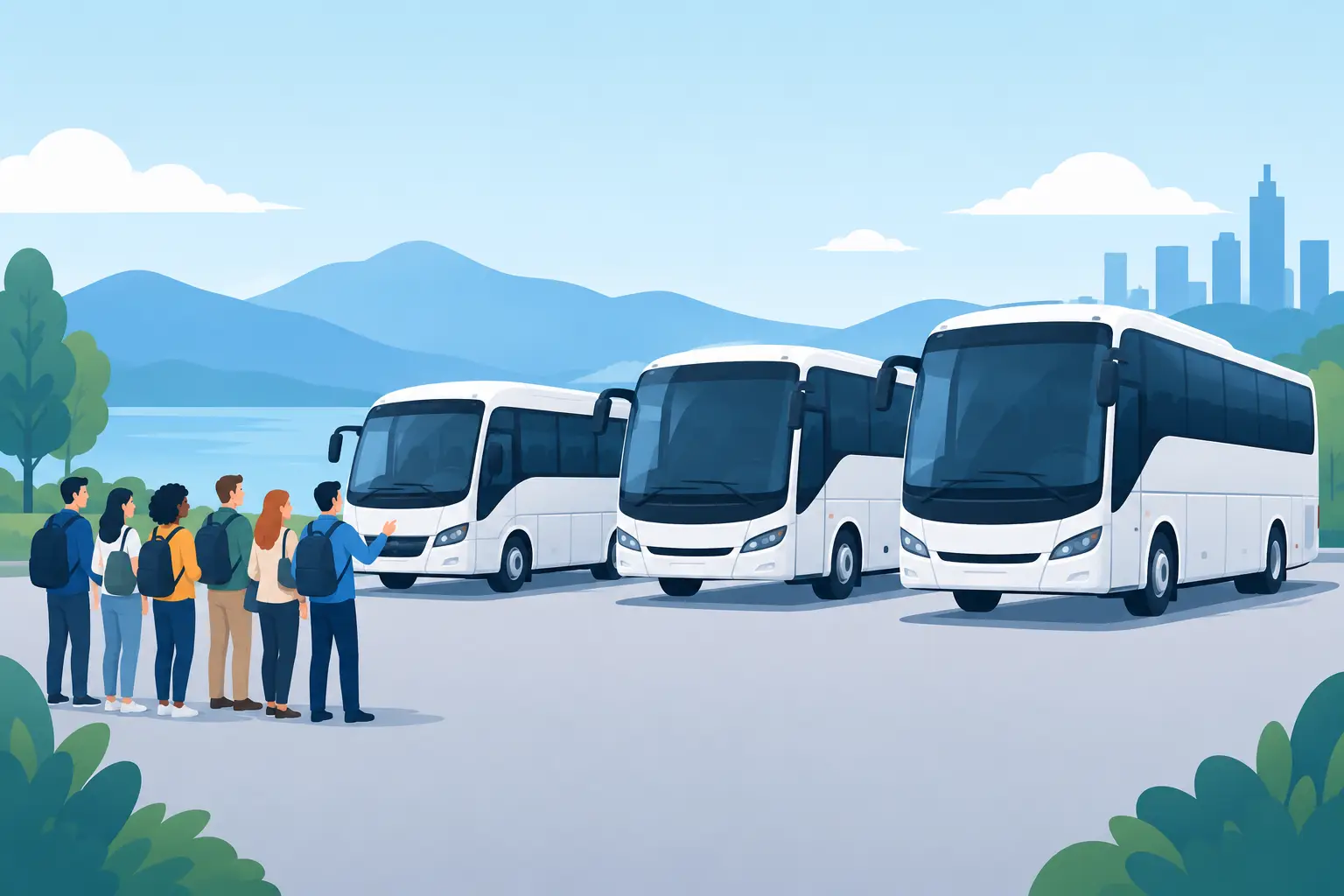
A 25-seat bus can look like the obvious choice for a group of 24. Then the final guest list grows, several people bring overnight bags, and the group needs to collect passengers from two locations. Good bus size advice considers more than the number beside the RSVP list. It helps you choose transport that keeps the group together, on time, and comfortable from the first pickup through the final drop-off.
For a corporate transfer in Melbourne, a wedding shuttle on the Mornington Peninsula, or a Yarra Valley winery outing, the right vehicle is the one that suits the actual trip – not just the original headcount. A little planning before you request a quote can prevent unnecessary vehicle changes, tight seating, and last-minute transport decisions.
Bus Size Advice Starts With Your Confirmed Headcount
Start with the number of passengers who will actually travel, including hosts, coordinators, photographers, tour guides, and children who need their own seats. Do not base the booking on invitations sent or likely attendance. For events, confirm the transport list several days before departure and update it if needed.
It is sensible to leave some room when your attendance is still moving. If 20 people are confirmed but another three or four may join, a 25-seat bus may be a more practical choice than a 21-seat vehicle. The extra seats give your group flexibility without requiring a second bus if plans change.
A full bus is not automatically a problem. For a short point-to-point transfer, such as a workplace trip from an office to a venue, booking exactly to capacity can work well. For a full-day regional charter, longer journey, or trip involving bags and personal items, a little extra room often makes the day easier for everyone.
Match the Bus to the Type of Group Trip
The fleet size you need depends on where you are going, how long you will be traveling, and whether the group will stay together throughout the day. Bus and Driver Hire provides 12-, 14-, 21-, 25-, 34-, 45-, 48-, 50-, and 57-seat vehicles, giving organizers a clear range of options for small groups through to larger events.
Small groups: 12 or 14 seats
A 12- or 14-seat bus is often a good fit for executive transfers, family celebrations, airport-style group transfers, and small winery groups. These sizes keep everyone in one vehicle without paying for unused capacity. They are also useful where pickup access or parking may be more limited than at a major event venue.
For a small group heading to the Yarra Valley, consider whether everyone will be carrying bags, coolers, purchases, or event items. If so, stepping up in size may be worthwhile even when passenger numbers fit within the smaller vehicle.
Medium groups: 21, 25, or 34 seats
These vehicle sizes suit many wedding guest shuttles, team functions, regional day trips, and staff transfers. A 21-seat bus can work well for a confirmed group of around 16 to 20, while a 25-seat bus gives more room for a group in the low twenties. A 34-seat vehicle is a practical option when the guest list is near 30 or when comfort and space matter more on a longer itinerary.
This range is especially useful for events with staggered travel. For example, a wedding party may need one earlier transfer for close family and the bridal party, followed by a larger return shuttle for guests. Selecting sizes around each trip’s passenger count can be more efficient than booking one oversized vehicle all day.
Larger groups: 45, 48, 50, or 57 seats
For large corporate functions, school-adjacent community events, major family occasions, and group tours, a 45- to 57-seat bus helps keep a large party coordinated. One vehicle means one departure time, one driver, and fewer concerns about guests arriving late after navigating unfamiliar roads or finding parking.
The distinction between these sizes matters when your list is close to capacity. A group of 46 should not book a 45-seat vehicle and hope for cancellations. Likewise, a group of 42 traveling a short distance may find a 45-seat bus appropriate, while a group of 42 on a full-day tour may prefer the additional room available in a larger vehicle.
Consider Luggage, Purchases, and Event Equipment
Seat capacity refers to passenger seats. It does not tell the full story about what your group needs to bring. Luggage volume, mobility aids, wedding decorations, sporting equipment, signage, and winery purchases can all affect the right vehicle choice.
Tell your transport provider about these items when requesting a quote. A group traveling to a regional accommodation venue with overnight bags has different needs from the same number of people traveling to a two-hour lunch. If passengers expect to buy wine or other goods during a Yarra Valley visit, mention that too. It allows the trip to be planned with the day’s practical requirements in mind.
For weddings, also think about garment bags, flowers, gifts, and the timing of formal photos. A vehicle that is correctly sized for guests but arrives before the venue is ready for drop-off can create its own problem. Clear pickup and drop-off instructions are as useful as selecting the correct number of seats.
Plan Around the Itinerary, Not Just the Destination
A direct transfer is straightforward: passengers board, travel together, and get off at one destination. A multi-stop charter requires more detail. Include every pickup location, winery, restaurant, accommodation venue, and planned return point in your quote request.
A Mornington Peninsula day trip may involve hotel pickups in Melbourne, several venue stops, then a late return. A workplace shuttle may run at set times between a station, parking area, and job site. In both cases, timing, road access, and the number of passengers at each stop affect the best bus size and service plan.
If guests are joining or leaving at different points, give an estimated count for each leg. The bus must be suitable for the highest number of passengers on board at any one time. This is easy to overlook when organizers only count the final return group.
When Two Buses Make More Sense
One larger bus is often the simplest way to move a group, but it is not always the best answer. Two smaller buses may suit an event with separate pickup areas, different departure times, or guests staying at more than one accommodation venue. It can also help when a venue has limited access or a group needs an early transfer and a later return service.
The trade-off is coordination. Two vehicles mean organizers need clear passenger lists, pickup instructions, and a plan for keeping each group informed. For a single departure and destination, one appropriately sized bus is usually easier. For split schedules or multiple locations, separate vehicles can reduce waiting time and make the experience more convenient.
Details to Provide When You Request a Quote
A useful quote request gives the transport team enough information to recommend a suitable vehicle from the start. Include the travel date, preferred times, total passenger count, pickup and drop-off locations, and whether the trip is one-way, return, or an itinerary with multiple stops.
Also share the purpose of the trip. A corporate airport transfer, wedding guest shuttle, family reunion, and winery charter can have the same passenger count but very different timing and comfort needs. Mention luggage or special items, accessibility considerations, and whether the group has a firm finish time. If your headcount is still provisional, provide both the confirmed number and the likely maximum.
The most useful choice is rarely the smallest bus that technically fits everyone. Choose a size that reflects the real journey, the people traveling, and the level of comfort your event deserves. Once those details are clear, requesting a tailored quote is a straightforward next step toward a well-organized group trip.