
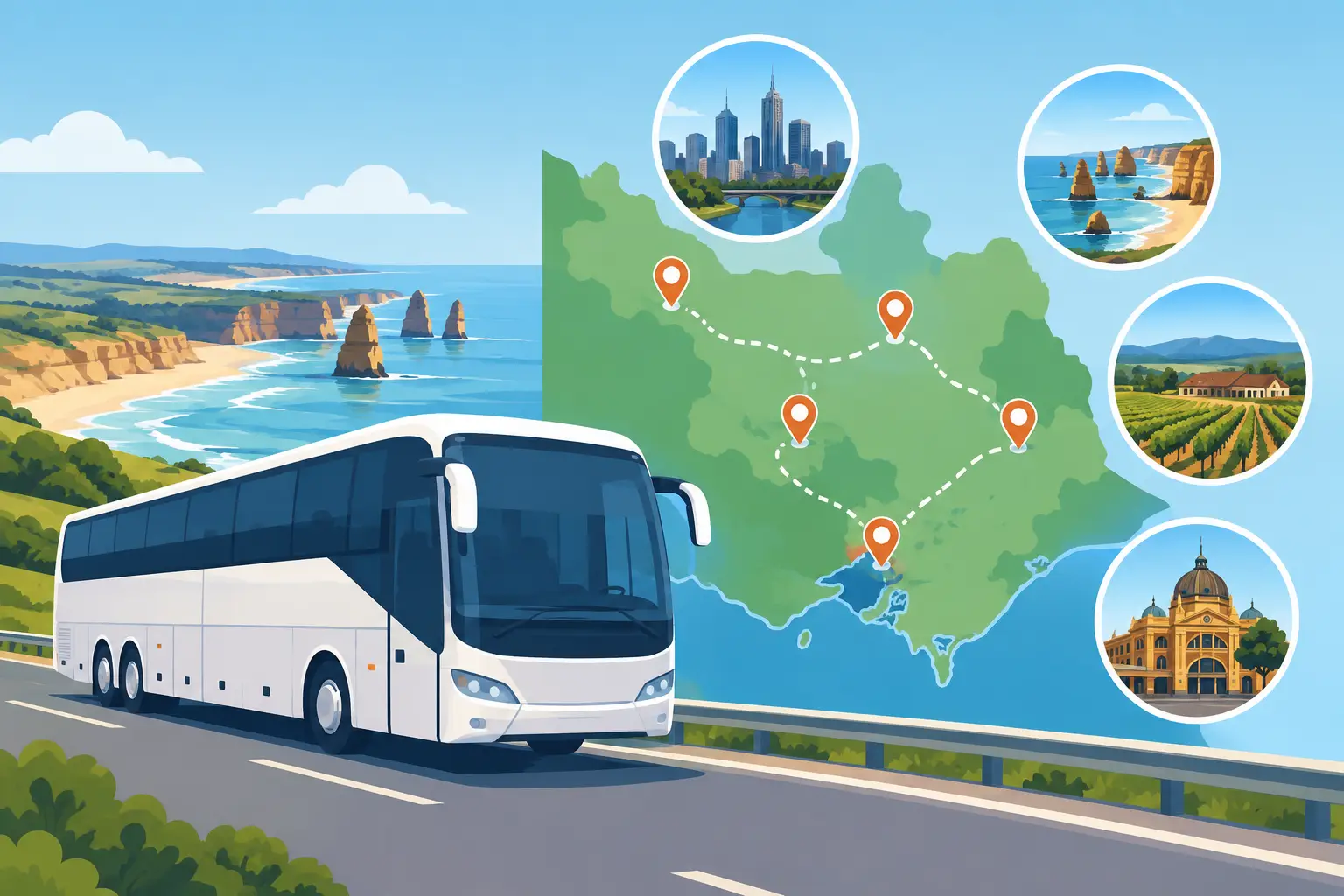
A group pickup rarely starts with everyone standing in one place. Guests may be coming from Melbourne offices, family homes, hotels, train stations, or separate suburbs. A multi stop bus charter keeps those moving parts under one plan, with a professional driver, a vehicle sized for your group, and an itinerary built around the times that matter.
For a winery day in the Yarra Valley, that might mean collecting guests from two Melbourne locations before heading east. For a wedding, it may mean transporting guests from accommodation to the ceremony, reception, and back again at the end of the night. The right charter is not simply about getting a group from A to B. It is about making every stop practical, safe, and on time.
When a multi stop bus charter makes sense
Multi-stop travel is a good fit whenever parking, designated drivers, late finishes, or regional directions would make separate cars difficult. Corporate teams use it for office pickups, conference transfers, site visits, and team functions. Wedding planners use it to keep guests moving between venues without relying on rideshares or individual drivers.
It also works particularly well for regional days out. The Mornington Peninsula and Yarra Valley are made for an itinerary with several destinations, but they are less enjoyable when your group has to manage a convoy, find parking at every venue, and nominate drivers to sit out tastings. With a bus and driver, everyone can arrive together and enjoy the day.
A multi-stop itinerary is not limited to leisure travel. Workplaces may need a morning shuttle from a station to a site, an afternoon transfer to a function venue, and a return run at a scheduled time. Family groups may need pickups from different suburbs before a birthday lunch, memorial service, or holiday gathering. The common benefit is coordination: one transport plan rather than a stream of messages about who is where.
Start with the route, not just the destination
The most useful quote begins with the full shape of the day. Your final destination matters, but so do the pickup locations, the order of stops, time spent at each venue, and the expected finish time. A route that appears simple on a map can become inefficient if it doubles back through Melbourne traffic or leaves too little time between appointments.
When planning your charter, provide the date, passenger numbers, all pickup and drop-off addresses, and your preferred schedule. If timing is fixed for a ceremony, restaurant reservation, flight, or booked winery tasting, include that too. These details allow the transport plan to account for travel time, loading passengers, and the reality that groups do not board a bus instantly.
For regional trips, it is sensible to leave some breathing room between venues. Tasting sessions can run over, guests may want to use facilities before departure, and popular areas can be busy on weekends. A driver-led charter gives you structure, but a workable schedule still needs room for the day to run naturally.
Choose pickup points that help the group
More stops can be convenient, but they can also add time. There is usually a balance between door-to-door collection and a few well-chosen meeting points. For a large Melbourne group, a central location near public transportation may be easier than collecting people across several suburbs.
For weddings and family events, pickup points often need to be more flexible. Accommodation venues, ceremony locations, and reception sites may all be essential stops. In those cases, make the passenger experience the priority and allow enough time for each transfer.
Match the bus to passenger numbers and luggage
The best vehicle is one that gives your group enough room without paying for unused seats. Bus and Driver Hire offers 12-, 14-, 21-, 25-, 34-, 45-, 48-, 50-, and 57-seat buses, making it possible to match transport to a small family group, a work team, or a full event party.
Passenger count is the starting point, but it is not the only consideration. Airport or overnight travel may involve luggage. A wedding group may include formalwear, decorations, prams, or mobility requirements. A winery group may need space for purchases collected during the day. Mention these requirements when requesting a quote so the selected vehicle suits the whole trip.
If your group is close to a capacity limit, it is usually worth allowing for a few additional seats. Last-minute guest additions happen, particularly for social events. A little extra room can also make longer regional journeys more comfortable.
Build a schedule people can actually follow
A good itinerary is clear enough that guests know where to be, but not so tight that one delayed departure affects the entire day. Give each pickup a stated time and advise passengers to be ready a few minutes earlier. For event organizers, nominate one contact person who can communicate changes to the driver and gather the group when it is time to leave.
For a typical winery outing, plan the day around confirmed reservations first. Work backward to set Melbourne pickup times, then allow for the return journey and any final drop-offs. If lunch is at a particular venue, do not treat it as a flexible stop. Build the route around it.
For corporate travel, distinguish between arrival time and departure time. If a presentation begins at 9:00 a.m., the group may need to arrive at 8:40 a.m. for registration, coffee, or security access. The same approach applies to airport transfers, where check-in expectations should guide the schedule rather than the flight departure time alone.
Plan the return as carefully as the outbound trip
Return transport is where a charter can remove the most pressure. After a reception, concert, dinner, or long day of touring, guests should not have to decide who can drive, book separate rides, or locate a parked vehicle. Set return pickup points and times before the event, then share them clearly.
Sometimes one return departure is right for the group. Other events need staggered runs, particularly weddings where some guests leave earlier than others. This can be arranged depending on the itinerary, available timing, and vehicle requirements. The important step is raising it during planning rather than trying to solve it at the end of the night.
What to include in your quote request
A tailored charter quote is more accurate when it reflects the complete itinerary. Include the travel date, estimated passenger total, preferred bus pickup time, each stop, and final drop-off locations. Identify whether the trip is for a corporate transfer, wedding, winery tour, work shuttle, family event, or another occasion.
It also helps to note any fixed bookings, luggage needs, accessibility considerations, or late-night return requirements. If you are still finalizing venues, provide the likely route and explain what may change. That allows the plan to be shaped around your current information while keeping expectations realistic.
Prices can vary because a multi-stop charter depends on more than distance. The length of the booking, number of stops, time of day, vehicle size, waiting time, and location all affect the transport requirements. A clear itinerary avoids surprises and helps ensure the quote is based on the service you actually need.
Make the day easier for the person organizing it
The organizer often carries the hidden workload of group travel: confirming numbers, answering location questions, arranging parking, checking who is driving, and keeping people on schedule. A charter reduces that burden, but communication still matters. Send guests one simple message with pickup locations, pickup times, the main contact number, and expected return details.
For larger groups, a passenger list can be useful for your own planning. You do not need to turn the trip into a roll call, but knowing who is expected at each pickup makes it easier to spot an issue before the bus departs. For corporate groups, include any venue instructions that affect arrival, such as a designated entrance or security check-in point.
A well-planned multi-stop charter gives your group a reliable way to move through a busy day without turning transport into the main event. Share the route, timings, passenger count, and any special requirements when you request a quote, and you can spend more time looking forward to the occasion than coordinating cars.