
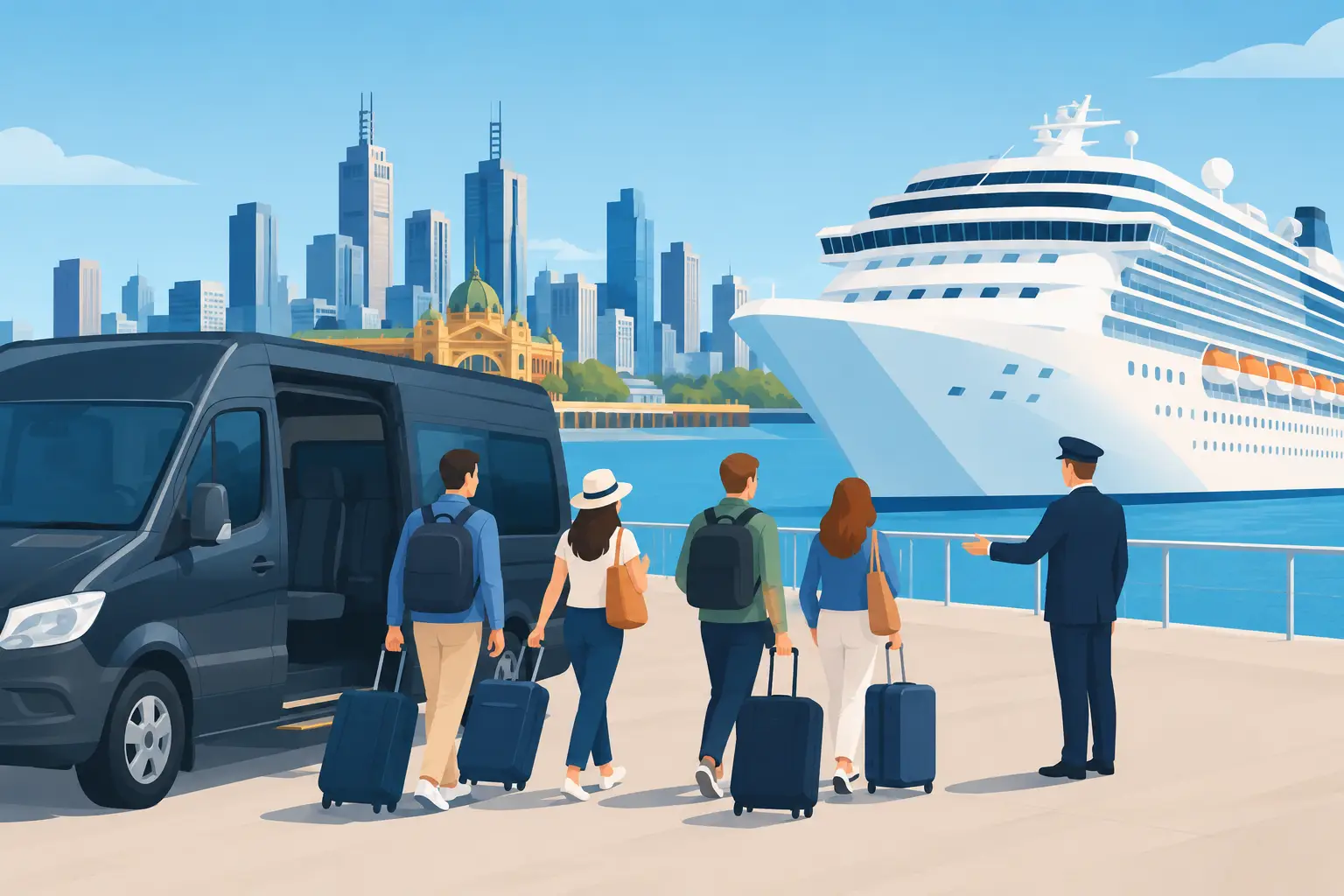
A cruise ship can bring hundreds of passengers ashore within a short window. For a group heading to a hotel, airport, conference, winery, or private event, that makes timing and coordination the real challenge. Professional cruise ship transfers give your group one vehicle, one meeting plan, and a dedicated driver ready to move everyone together after disembarkation.
For Melbourne arrivals, a private bus transfer removes the uncertainty of splitting into rideshares, finding enough taxis, or asking guests to navigate an unfamiliar city with luggage. It is particularly useful when travelers have different mobility needs, a tight onward schedule, or an itinerary that starts as soon as they leave the port.
Why private cruise ship transfers work for groups
A cruise arrival is not like an ordinary pickup. Passengers may leave the ship at different times, baggage collection can take longer than expected, and port access procedures can affect exactly where a vehicle can wait. A planned group transfer accounts for those details before the day, rather than leaving the organizer to solve them curbside.
With a driver-led bus, your group travels from the same pickup point to the same destination. That means no tracking several vehicles, no waiting for late arrivals who have been dropped at the wrong hotel, and no need to assign a designated driver after a long voyage. It also gives corporate groups, families, tour hosts, and event planners a clear transport plan they can share with every passenger before departure.
Private transfers are often the practical choice for groups of 12 or more, but the right vehicle depends on more than headcount. Luggage, pickup timing, the number of stops, and where the group is going next all matter. A smaller bus can be a sensible option for a compact group with light luggage, while a larger vehicle may be more comfortable for a full cruise party traveling with suitcases and carry-on bags.
Planning cruise ship transfers from Melbourne ports
Most cruise visitors arriving in Melbourne disembark at Station Pier in Port Melbourne. It is close to the city, but a large group can still lose valuable time if the pickup instructions are vague. The best plan identifies a clear passenger meeting point, a phone contact for the group organizer, and a realistic pickup time based on the ship’s scheduled arrival and disembarkation process.
Your driver needs the cruise ship name, arrival date, expected disembarkation time, passenger count, and destination. If the group is flying out later that day, include flight times and airline details in the booking request. If the group is heading to accommodation, provide the hotel name and any planned stops for key collection, lunch, or supplies.
It is wise to allow a buffer between the scheduled ship arrival and your bus departure. Ships can arrive on time while passengers still face delays getting off, collecting bags, or passing through terminal procedures. On the other hand, booking the vehicle too early may mean the group is waiting around before they are ready to travel. A tailored quote and pickup plan can balance those two realities.
Luggage changes the vehicle decision
Seat capacity is only part of the vehicle choice. Cruise guests frequently travel with larger suitcases than day-trip passengers, and a group returning from a long itinerary may have extra bags, purchases, or mobility equipment. Let the transport provider know whether each traveler is likely to have checked luggage, carry-on bags, or both.
Bus and Driver Hire can arrange driver-inclusive vehicles from 12-seat through to 57-seat capacities, including 14-, 21-, 25-, 34-, 45-, 48-, and 50-seat options. Providing accurate luggage details helps match the group with a vehicle that has suitable room rather than selecting solely by the number of seats.
For a full coach-sized group, keeping bags organized also helps the departure run smoothly. Ask passengers to label their luggage clearly and keep essential items, medications, travel documents, and valuables with them. If guests are joining different onward flights or hotel bookings, a simple name list can prevent bags being loaded onto the wrong vehicle or left behind at the terminal.
Common cruise transfer itineraries
The simplest booking is a one-way port-to-hotel or port-to-airport transfer. These are ideal for groups extending their stay in Melbourne, joining a conference, or flying home after their cruise. The driver collects the group at the agreed location and takes them directly to their destination, with room to plan a sensible loading and drop-off sequence.
Some groups need more than a direct transfer. A family gathering may start with a port pickup, continue to a restaurant or private venue, then finish at several hotels. Corporate guests may arrive by ship before traveling to an event, an office, or accommodation in the CBD. A charter bus is useful in these cases because the itinerary can be built around the group’s actual day rather than a fixed route.
Regional travel is another common reason to arrange a private vehicle. Visitors may want to leave the port and spend the day in the Yarra Valley or Mornington Peninsula before checking into Melbourne accommodation. This can work well when the schedule is realistic. A winery itinerary, for example, needs time for the drive, tastings, meals, and the return journey. Trying to fit too many venues into a cruise arrival day can make the experience rushed, especially if disembarkation is delayed.
For groups with a late flight, a half-day Melbourne program can be a better fit. Your driver can manage the transport between selected stops while the group stays together and luggage remains accounted for. The key is to build the plan around the non-negotiable time, usually airport check-in, rather than assuming the ship will release everyone at the earliest possible minute.
What to include when requesting a quote
A detailed request produces a more accurate vehicle recommendation and price. Start with the date, cruise ship, pickup location, requested departure time, and total number of passengers. Then add the drop-off address, expected luggage volume, and any intermediate stops.
It also helps to flag practical requirements early. This may include passengers with limited mobility, children requiring appropriate seating arrangements, a need for multiple drop-offs, or a return transfer back to the port at the end of a shore visit. If you are organizing for a company, wedding party, or tour group, nominate one person as the day-of contact who can communicate with the driver if the group is delayed.
Do not assume a public pickup area will accommodate a large bus at every time of day. Port procedures, road access, and event activity can affect where a vehicle can safely load passengers. A professional operator will confirm the pickup approach and advise on the information passengers need before arrival.
Timing mistakes that create unnecessary pressure
The most common mistake is treating the ship’s docking time as the same as the group’s ready-to-board time. They are different. Allow time for the ship to be cleared, passengers to disembark, and baggage to be collected. Groups with elderly travelers, young children, or several large bags should allow additional time.
Another issue is booking a transfer only for the transfer itself, without considering the destination’s access. CBD hotels can have busy loading zones, airports have terminal-specific procedures, and regional venues may have narrow driveways or set arrival times. Share the full destination details so the route and drop-off can be planned properly.
Finally, avoid collecting multiple informal arrival updates from every passenger. Give the group one meeting instruction and one organizer contact. A clear message such as “collect your bags, proceed to the agreed meeting point, and wait with your group” is far more effective than a stream of individual texts.
A better start or finish to your cruise itinerary
Cruise ship transfers are not simply about getting a group from the pier to the next address. They create a controlled handover between the cruise schedule and the rest of the trip. When the vehicle size, luggage allowance, meeting point, and onward timing are planned in advance, everyone can leave the port with less waiting and fewer decisions to make.
Request a quote with your cruise date, passenger numbers, luggage details, and planned destination. A properly sized bus and professional driver give your group a practical, organized way to start exploring Melbourne and Victoria or reach the next stop on time.