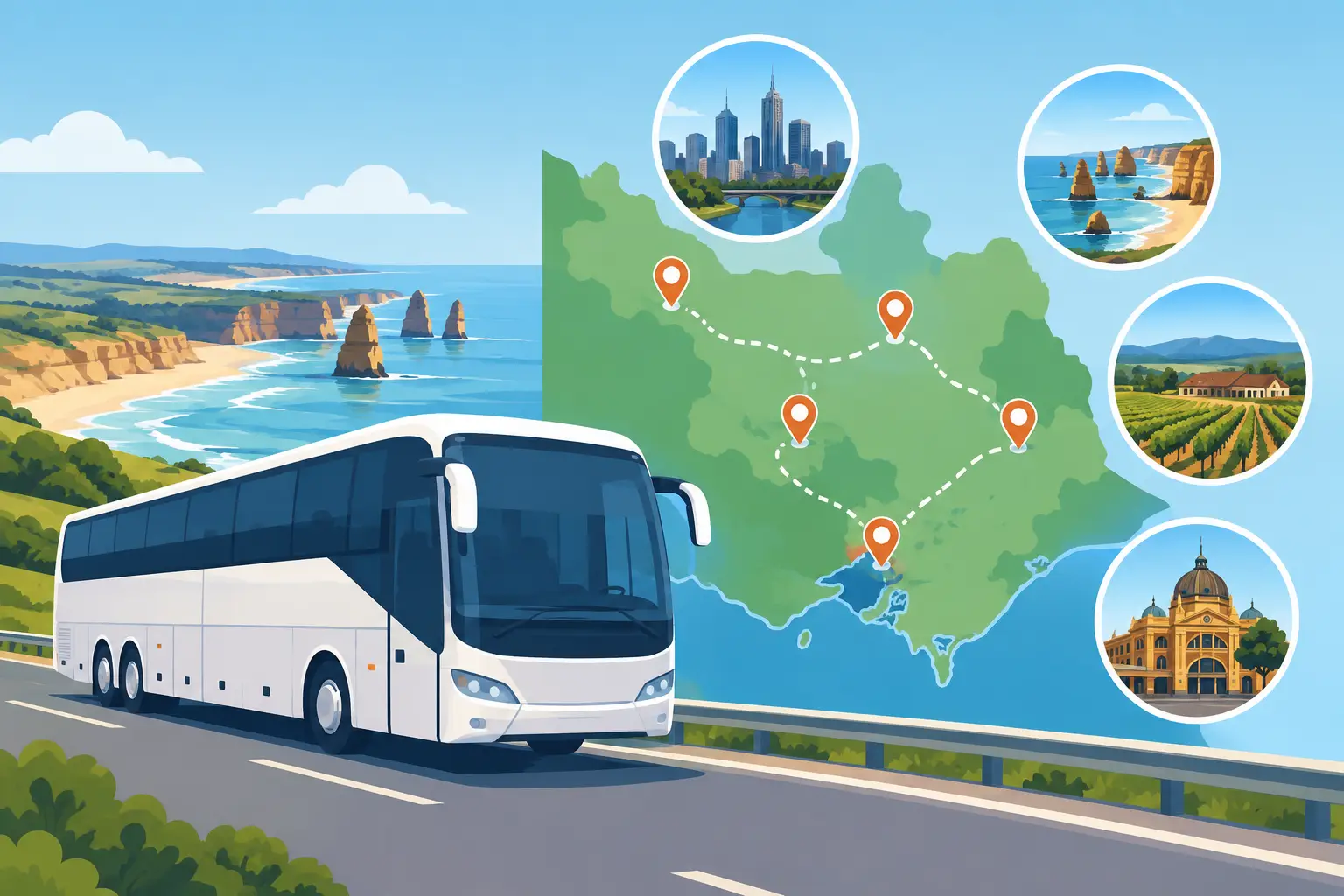

When 30 wedding guests are leaving a reception at the same time, or 50 employees need to reach a regional site before a shift starts, multiple cars quickly become the hard part of the plan. Charter buses keep the group together, put a professional driver behind the wheel, and give organizers one clear arrival plan instead of dozens of separate travel decisions.
For group travel across Melbourne, the Mornington Peninsula, the Yarra Valley, and Country Victoria, the right bus is not simply the biggest one available. It is the vehicle that fits the passenger count, luggage needs, route, and timing of the day. A well-planned charter makes the travel portion feel organized from the first pickup through the final drop-off.
When charter buses make the most sense
A driver-led bus is a practical choice whenever the group needs to arrive together or travel between several locations. Corporate teams use them for airport transfers, conferences, client events, and staff functions. Workplace managers use them for recurring employee shuttles, particularly where parking is limited or a site sits outside convenient public transit routes.
They are equally useful for occasions where nobody wants to manage the driving. A Yarra Valley winery day involves regional roads, timed bookings, and often a long lunch. A Mornington Peninsula celebration may include pickups from Melbourne, a ceremony venue, and accommodation at the end of the night. With the transport assigned to one driver and one itinerary, guests can focus on the occasion rather than maps, parking, and designated drivers.
Family events also benefit from a single transport plan. Whether it is a milestone birthday, reunion, sporting group, or memorial gathering, a bus gives people a shared meeting point and a more reliable way to move between venues. It also helps guests who are unfamiliar with the area travel comfortably.
Choose a bus size around the real group
Capacity is the starting point for any charter booking. Booking a bus that is too small creates an immediate problem. Booking far more seats than needed can add unnecessary cost, particularly for a straightforward transfer. A capacity-led fleet allows organizers to match the vehicle to the group rather than forcing every trip into the same format.
Bus and Driver Hire offers 12-, 14-, 21-, 25-, 34-, 45-, 48-, 50-, and 57-seat buses. Smaller vehicles work well for executive groups, family outings, compact winery groups, and airport transfers. Mid-sized buses can suit wedding guest shuttles, team functions, and day tours. Larger buses are a strong fit for major events, school or sporting groups, workplace transport, and large wedding parties.
Your headcount should include everyone who will be on board, not only the people who have confirmed first. For an event with a guest list still changing, allow for realistic numbers before selecting capacity. It can be sensible to leave a small margin, but the right margin depends on the event. A fixed workplace shuttle may have an accurate passenger list, while a wedding transfer may need room for last-minute additions.
Luggage and equipment can also affect the best choice. Airport travelers may have suitcases. Golf, sporting, or event groups may carry extra gear. Let the transport provider know early so the quote reflects the practical needs of the trip, not just the number of seats.
Plan the route before requesting a quote
The clearest quote requests describe the trip as it will actually happen. Start with the date, pickup location, approximate passenger count, and required pickup time. Then include every planned stop, the final destination, and the expected return time if the booking is a round trip.
For a simple point-to-point transfer, this may only take a few lines. For a winery itinerary or wedding day, the schedule needs more detail. Include venue names, booking times, meal breaks, and whether the bus will wait at each stop or return later. That information helps set realistic travel times and ensures the driver is available when the group needs to move.
Melbourne traffic, regional roads, and event congestion can all change the timing. A weekday airport transfer is different from a Saturday trip through the Yarra Valley. A bus collecting guests after a city concert needs a different pickup approach than a mid-afternoon corporate transfer. Local knowledge matters because it helps build a schedule with enough time for the real journey, not just the distance shown on a map.
Details that help avoid day-of changes
Before confirming your booking, check the exact pickup address and identify a safe place for the bus to stop. Hotels, offices, venues, and private properties may have different access points. If your group is meeting in Melbourne’s central business district, confirm whether passengers should gather at a specific entrance rather than spreading across a block.
For weddings and events, nominate one contact person who can speak with the driver if timing changes. Share that person’s phone number in advance and make sure guests know the departure times. A bus can keep a group together, but only if passengers understand when and where to board.
If the trip includes multiple stops, set expectations about punctuality. Five minutes late at one winery can affect a restaurant booking or the final return time. A simple group message before departure can prevent confusion and reduce pressure on the day.
The difference a professional driver makes
Hiring a bus with a driver is not only about avoiding the need for volunteers to drive. It creates a single point of responsibility for the transport itself. The driver handles the route, vehicle movement, and safe passenger travel while the organizer focuses on the guests, event schedule, or work program.
For corporate travel, this can mean employees arrive ready for the day instead of dealing with parking or unfamiliar directions. For winery tours, it means every adult in the group can enjoy the day without assigning someone to remain sober and navigate regional roads. For wedding transfers, it gives guests a clear ride home or back to their accommodation after the celebration.
There are trade-offs to consider. A bus runs to an agreed schedule, so it is less flexible than guests leaving separately in their own cars. That structure is often the benefit, especially for large groups, but it should be communicated early. If some guests need to leave at different times, a second transfer or alternate arrangement may be more appropriate.
Charter options for common Victoria trips
A corporate charter may be a single airport run, an all-day conference transfer, or regular service between a train station and workplace. The route and frequency shape the quote, along with passenger numbers and waiting time.
Winery and regional tour charters need a realistic itinerary. The Yarra Valley and Mornington Peninsula are popular for good reason, but a better day is not always the one with the most stops. Allow time to travel, enjoy each venue, and board without rushing. A driver-led bus gives the host freedom to plan a social day while keeping the group’s transport coordinated.
Wedding transport is often most effective as a shuttle rather than one long trip. Guests may need transport from accommodation to the ceremony, ceremony to reception, and reception back at the end of the evening. The best arrangement depends on venue access, guest numbers, and whether everyone follows the same schedule.
For family events and private celebrations, a charter can remove the awkward question of who drives. It is especially useful when guests are coming from different suburbs or when the event is outside Melbourne. One pickup route may work well for a local group; for guests spread widely across the city, a central meeting point can be more efficient.
Request a quote with confidence
The most useful quote request includes your travel date, passenger count, pickup and drop-off locations, itinerary, and preferred times. Mention the purpose of the booking, such as a corporate transfer, wedding shuttle, winery trip, family event, or work shuttle. This gives the transport team the context needed to recommend a suitably sized bus and driver.
If some details are still being finalized, provide the best available plan and note what may change. It is better to discuss a likely itinerary early than wait until every minor detail is locked in. For popular dates, early planning also gives your group more certainty around vehicle availability.
A good group trip starts before anyone boards. Set the meeting point, choose a bus that suits the group, and build enough time into the route. Then the journey becomes part of a well-run day rather than the part everyone has to manage.