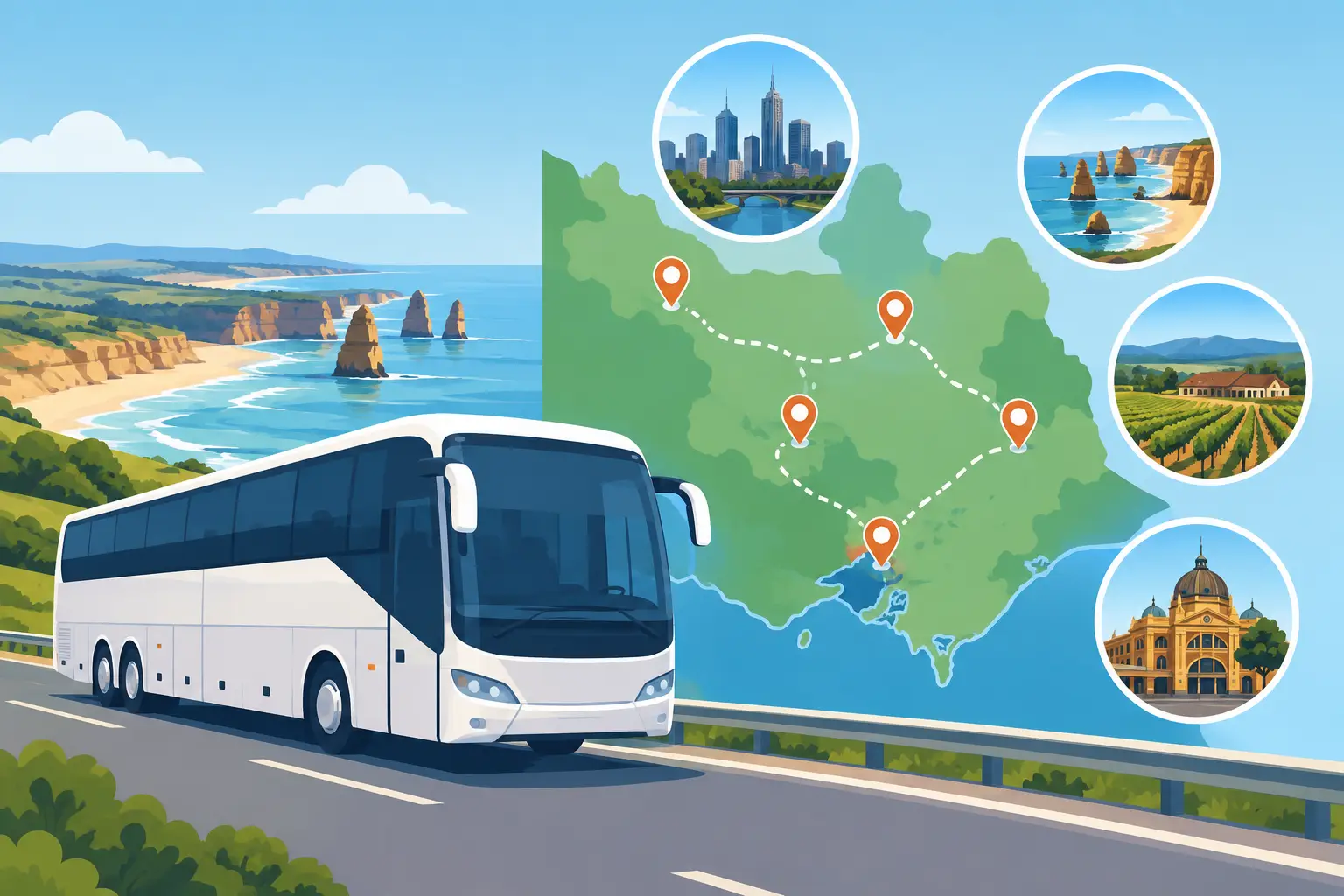

A group lunch in the Yarra Valley can become complicated before the first booking is made. Someone needs to nominate drivers, coordinate meeting points, check parking, account for late arrivals, and make sure everyone gets home safely. This driver inclusive charter guide explains how hiring a bus with a professional driver replaces that moving list of jobs with one planned service.
For corporate teams, wedding guests, winery groups, family events, and workplace shuttles, the goal is simple: get the right people to the right places at the right time. The best charter is not necessarily the biggest bus or the lowest initial quote. It is the vehicle capacity, schedule, route, and driver service that fit the group’s actual plans.
What a Driver-Inclusive Charter Includes
A driver-inclusive charter is the hire of a bus and qualified driver for your planned transfer, event, or itinerary. Rather than organizing separate cars or assigning a member of the group to drive, your passengers travel together while the driver handles the road, route, pickup timing, and parking requirements.
The booking can be as straightforward as a one-way airport or venue transfer. It can also cover a full day with several stops, such as a Mornington Peninsula celebration, a Yarra Valley winery itinerary, or transport between a wedding ceremony, reception, and accommodation.
The details matter because charter pricing and vehicle availability are based on the trip requirements. A useful quote request states the travel date, passenger numbers, pickup suburb, destinations, preferred pickup and return times, and any planned stops. If the itinerary is still being finalized, provide the best available outline and flag what may change.
Start With Passenger Numbers, Not a Guess
The first decision is vehicle capacity. Count every passenger who needs a seat, including organizers, children, staff members, photographers, or event suppliers traveling with the group. Do not assume a 25-seat bus will work for “about 25” guests if numbers could rise before the day.
Bus and Driver Hire offers 12-, 14-, 21-, 25-, 34-, 45-, 48-, 50-, and 57-seat vehicles. That range gives organizers a practical alternative to paying for unused seats or splitting a group between multiple cars.
A smaller bus can be ideal for a close family group, executive transfer, or compact winery outing. A 45- to 57-seat coach-style option is often a better match for staff functions, large wedding guest lists, school-adjacent events, and major celebrations. If attendance is uncertain, it may be worth choosing the next capacity up rather than asking guests to arrange their own transport at the last minute.
Capacity is not the only consideration. Luggage, golf bags, event equipment, mobility needs, and bulky personal items can affect what is practical. Mention these at the quote stage so the vehicle recommendation reflects the whole trip, not only the headcount.
Build an Itinerary That Works on the Road
A good itinerary has enough structure to keep the day on track, with enough flexibility for real conditions. Regional travel takes longer than many groups expect, particularly when collecting passengers from several Melbourne locations or traveling on busy weekends.
Start with one clear pickup point whenever possible. A central meeting location reduces loading time, avoids repeated detours, and makes it easier to confirm who is on board. If multiple pickups are necessary, list them in the order you expect to travel, along with the preferred arrival time at the final destination.
For a winery charter, include each venue, reservation time, and expected departure time. For a wedding, include ceremony start, photo locations if transport is required, reception arrival, and final return runs. Corporate organizers should allow time for sign-in procedures, conference starts, and staggered end times.
It is sensible to build a time buffer around the parts of the day that cannot move. A wedding ceremony, a restaurant reservation, or a flight departure needs a reliable arrival window. Lunch finishes, sightseeing stops, and informal drinks may have more flexibility. Your charter provider can assess the route and help identify where the schedule is too tight.
Consider access at every stop
A bus needs safe and suitable access, especially at private properties, regional venues, narrow driveways, and busy inner-city streets. Tell the operator if a pickup involves a steep driveway, unsealed road, gated estate, restricted parking area, or accommodation with limited turning space.
This does not mean every location is unsuitable. It means the route needs to be planned for the vehicle size. Sharing access information early can prevent a day-of change that affects timing and passenger convenience.
Match the Charter to the Occasion
The same driver service works differently depending on why the group is traveling. A corporate transfer usually benefits from a precise, direct schedule. A winery day needs sensible stop timing and a clear final pickup arrangement. Wedding transport should make it easy for guests to arrive together without navigating unfamiliar locations.
For work shuttle buses, consistency is usually the priority. Confirm the shift times, pickup locations, number of passengers, and whether the service is a one-off requirement or recurring arrangement. A recurring shuttle plan may need extra attention around roster changes, public holidays, and variations in passenger numbers.
Family events can be less formal, but the transport plan should still be specific. Consider older relatives, children, the final drop-off time, and whether the group will remain together or divide after the event. A single return point is the most efficient arrangement, although multiple drop-offs may be practical for some trips.
Regional charters offer a major advantage for groups that want to enjoy the destination rather than manage the drive. No one has to monitor alcohol consumption, navigate unfamiliar roads, or leave early to collect a car. That said, a driver-led charter is not an open-ended day without a plan. Venues, travel distances, and driver hours all need to be considered when setting the itinerary.
Questions to Settle Before Requesting a Quote
Before contacting a charter operator, confirm the key decisions within your group. You do not need a minute-by-minute schedule, but you should be able to explain the purpose of the trip and the expected flow of the day.
Provide the following information in your request:
- Travel date and preferred pickup time
- Total passenger count and likely changes to that number
- Pickup and drop-off addresses or suburbs
- Every planned stop, including venue reservation times
- Whether the trip is one-way, return, or a full itinerary
- Luggage, equipment, accessibility needs, or unusual access conditions
If you are organizing on behalf of a workplace or event client, nominate one decision-maker for schedule changes. Conflicting instructions from several passengers can create avoidable confusion. A single contact person gives the driver and charter team a clear point of communication before the trip and on the day.
On-the-Day Planning Makes the Difference
Send passengers the final pickup address and time well before departure. Ask them to arrive a little early, particularly for city pickups, large venues, or trips with multiple scheduled stops. A late departure can affect every part of a regional itinerary.
Keep the driver’s role clear. The driver is there to operate the vehicle professionally and move the group safely according to the agreed schedule. The trip organizer should manage passenger communication, confirm venue changes, and make sure the group returns to the bus at the arranged times.
For events where passengers may be spread across a venue, choose an easy-to-recognize meeting point for the return. Confirm the final departure time in writing or through the group’s usual communication channel. This is especially useful after evening receptions, concerts, sporting events, and winery visits where phone batteries and reception can be unreliable.
A well-planned charter gives your group more than a ride. It creates a shared arrival, a safer return, and a calmer experience for the person responsible for organizing it. Request a quote with your date, group size, and itinerary, then let the transport plan match the day you actually want to have.